
The Ultimate Guide to Dock Rub Rails: Protecting Your Hull from Costly Scratches
Every boat owner knows the feeling of a less-than-perfect landing. A sudden gust of wind, a tricky current, or a passing wake can push your vessel into the dock edge in a split second. Without a protective barrier, that minor bump can result in deep scratches, gouges, or expensive fiberglass repairs—a headache collectively known as “dock rash.”
Whether you own a residential dock, marina slip, or floating dock system, dock rub rails help absorb impact, reduce wear, and protect both your vessel and docking structure during everyday use.
In this guide, we’ll explain what dock rub rails are, how they work, the different types available, and why they are an essential addition to modern dock systems.
What are Dock Rub Rails?
Dock rub rails (often called dock edging or bumper strips) are heavy-duty, impact-absorbing strips mounted directly to the exposed edges, corners, and pilings of a dock. While traditional wood or bare aluminum frames are rigid and unforgiving, rub rails act as a cushion.
They act as a buffer between:
- Boats and dock edges
- Personal watercraft and dock corners
- Mooring impacts and dock surfaces
Rub rails are commonly made from:
- PVC or vinyl
- Rubber
- Foam-filled materials
- Composite marine-grade materials
They are designed to handle repeated impact while resisting water, UV exposure, and harsh marine conditions.
Why Every Shoreline Needs Dock Rub Rails
1. Constant Defense Against “Dock Rash”
Even when your boat is securely tied up, it is never truly still. Wind, waves, and wakes from other watercraft keep your vessel in constant motion. Over hours or days, this continuous shifting causes repetitive friction against the dock. High-quality rub rails prevent this friction from chewing through your boat’s gelcoat.
2. Protection from Misjudged Approaches
Whether you are teaching a beginner how to steer a jet boat at low speeds or trying to park a heavy cruiser on a windy afternoon, mistakes happen. Rub rails provide a physical insurance policy for those moments when an approach is just a little too fast or off-angle.
3. Long-Term Savings on Repairs
Fiberglass and gelcoat repairs are notoriously expensive and time-consuming. Investing in premium dock edging upfront costs a fraction of a single professional hull repair, saving you money and keeping your boat in the water where it belongs.
Types of Dock Rub Rails
1. Straight Rub Rails
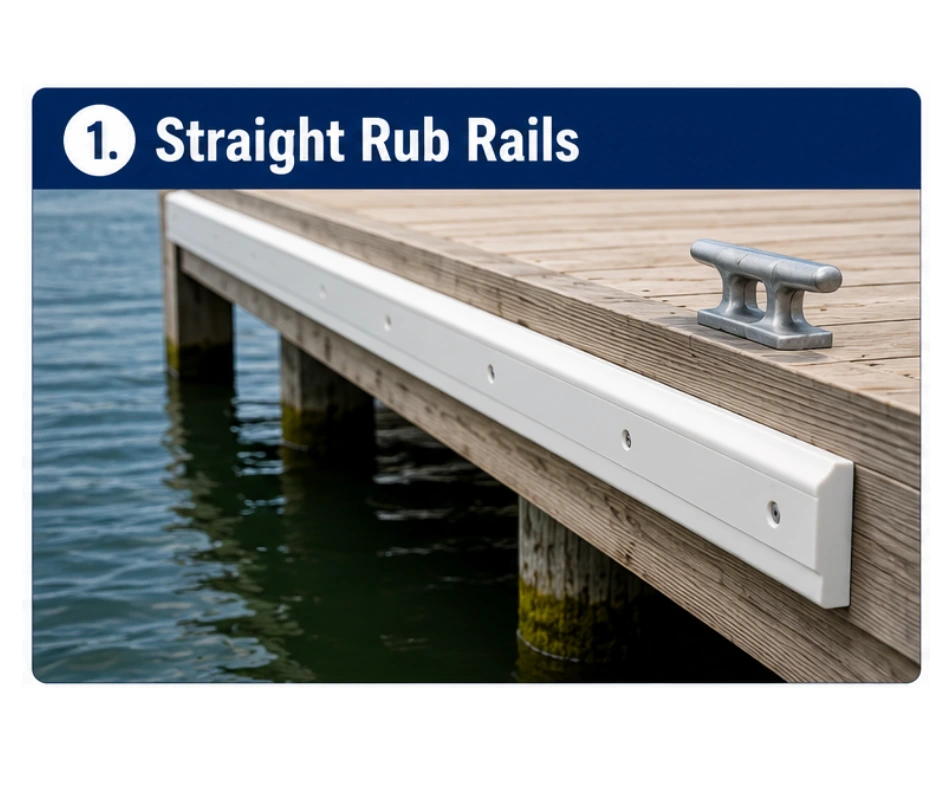
Straight rub rails are mounted along the sides of docks to provide continuous protection where boats commonly make contact.
Best for:
- Residential docks
- Floating dock systems
- Marina slips
2. Corner Rub Rails
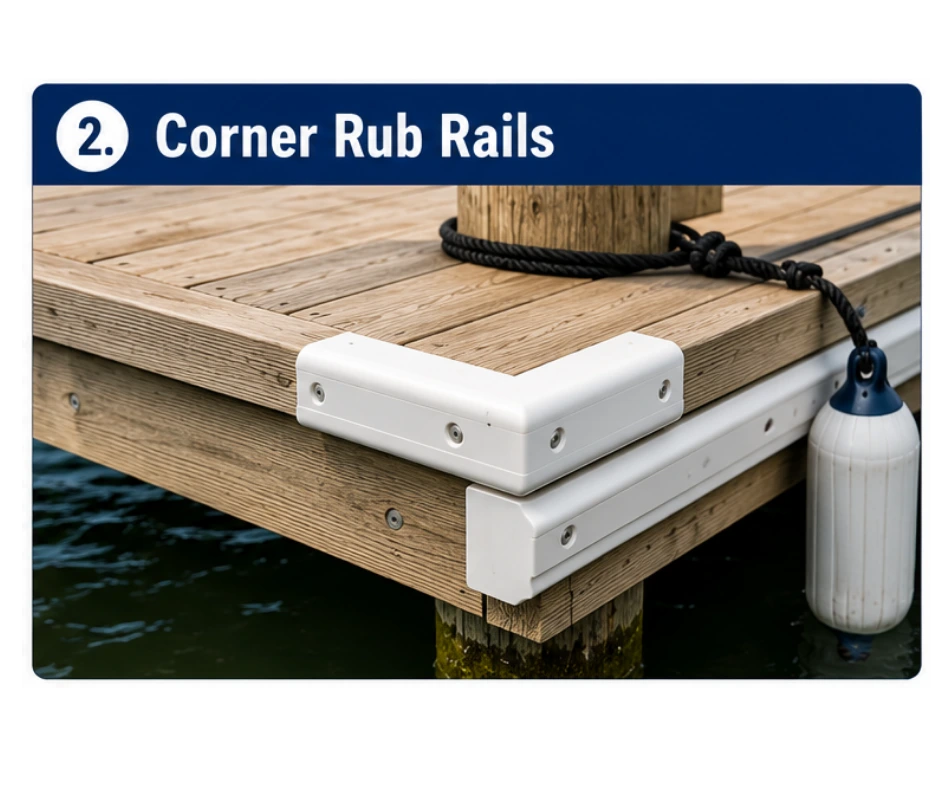
Corner sections protect vulnerable dock corners where impacts are more likely during docking.
These are especially useful for:
- Tight maneuvering areas
- PWC docks
- Busy marinas
3. Heavy-Duty Rub Rails
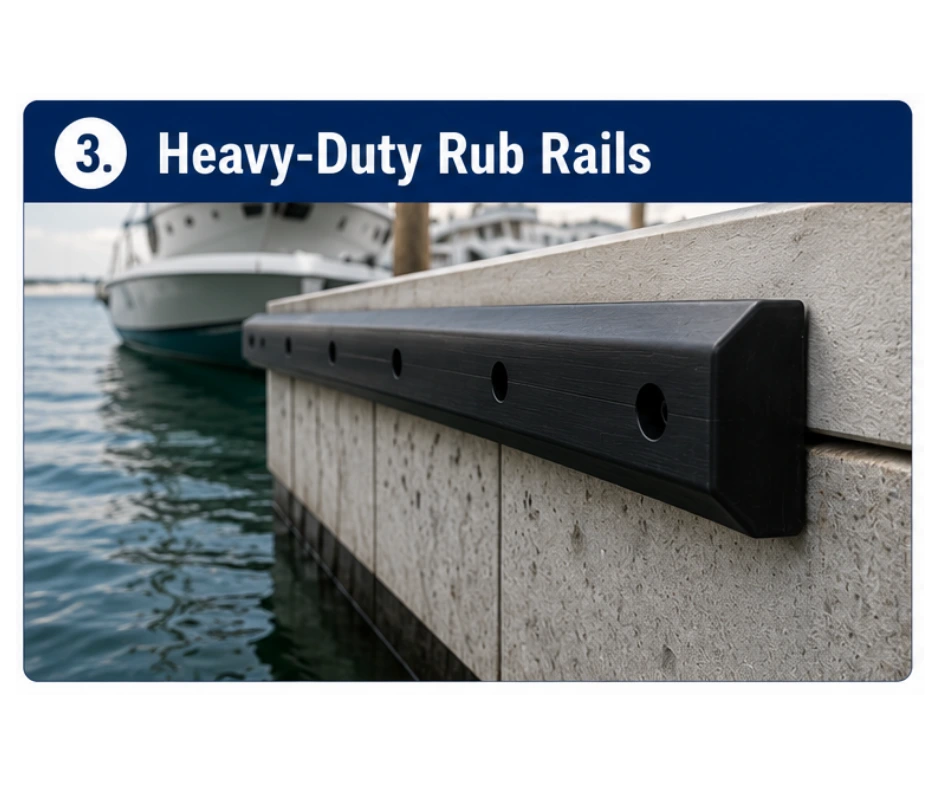
Designed for larger boats and commercial applications, heavy-duty rails offer extra thickness and durability for high-impact environments.
4. Flexible Rub Rails
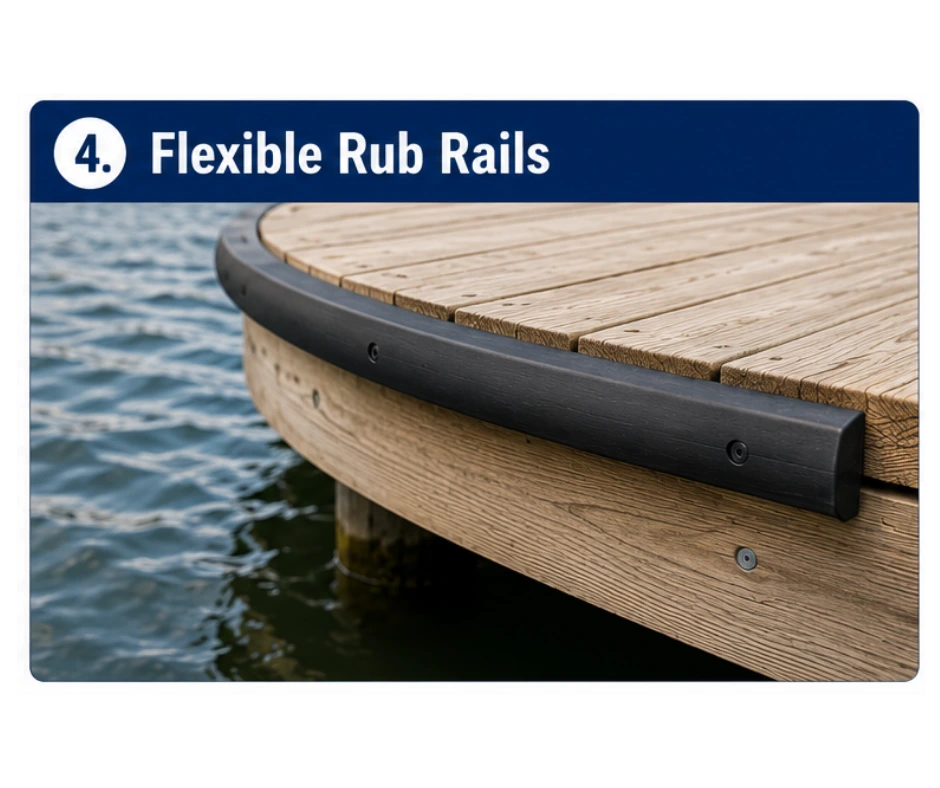
Flexible rails contour to curved dock edges and uneven surfaces while still providing impact protection.
Where Should Dock Rub Rails Be Installed?
For maximum protection, dock rub rails are commonly installed:
- Along dock edges
- Around slips
- Near boat lifts
- On floating dock corners
- Around PWC ports
The goal is to protect areas where boats frequently make contact.
Upgrading Your Total Waterfront Defense
While dock rub rails are an absolute necessity for the vertical sides of your pier, pairing them with the right docking strategy makes landing completely stress-free.
For the ultimate setup, use a telescoping boat docking pole to secure your lines early, allowing the boat to glide safely against your rub rails. If you deal with high-traffic channels or severe wakes, transitioning to an advanced system like mooring whips or a premium Hewitt boat lift will lift your boat completely out of harm’s way, giving you absolute peace of mind.