
Foam Floats for Docks: What They Are and Why They Matter
If you’re building or upgrading a floating dock, one of the most important components you’ll need to consider is flotation. Among the most popular options today are foam floats for docks—a reliable and widely used solution for keeping dock systems stable and above water.
In this guide, we’ll explain what foam floats are, how they work, their pros and cons, and whether they’re the right choice for your waterfront.
What Are Foam Floats for Docks?
Foam floats for docks are buoyancy devices typically made from expanded polystyrene (EPS) foam encased in a durable outer shell. Their job is simple but essential: to keep floating docks stable, level, and safely above water.
These floats are commonly attached underneath dock frames and are designed to support weight from:
- Foot traffic
- Dock accessories
- Boats and equipment
How Foam Floats Work
Foam floats provide buoyancy by displacing water. The sealed foam core ensures that even if the outer shell is damaged, the float will still maintain some level of flotation.
This makes them a dependable option for many residential and recreational dock systems.
Benefits of Foam Floats for Docks
1. Strong and Reliable Buoyancy
Foam floats are known for their consistent flotation. Unlike hollow air-filled tanks that can lose equilibrium if they develop a pinhole leak, foam-filled units provide consistent flotation that keeps your dock level and secure. This reliability is essential for maintaining a safe, flat walking surface, even when weight loads shift as passengers move across the dock.
2. Cost-Effective Option
For the budget-conscious dock owner, foam floats offer a perfect balance between performance and price. They are often a more affordable alternative to complex mechanical lifting systems while still providing decades of service. This makes them a popular and practical option for those looking to maximize their waterfront investment without sacrificing structural integrity.
3. Easy to Install
Time is often of the essence during the short boating season. Foam floats are notably lightweight and designed with integrated mounting flanges, making them exceptionally easy to attach to various dock frames. If you are tackling a DIY project or hiring a professional crew, the ease of handling these floats reduces labor time and simplifies the assembly of your floating system.
4. Widely Available
Because foam-filled technology has been a staple of marine construction for decades, these floats are widely available and highly compatible with a variety of systems. Whether you are repairing an older structure or building a new modular system like Wave Armor, finding the right size and buoyancy rating is straightforward. Their long-standing track record ensures that replacement parts and expansion modules are always easy to source.
Limitations of Foam Floats for Docks
While foam floats are reliable, there are some drawbacks to consider.
1. Vulnerability to Damage
If the outer shell cracks or breaks, the foam inside can become exposed. Over time, this may lead to:
- Water absorption
- Reduced buoyancy
- Environmental concerns
2. Wildlife Interference
In some areas, animals may chew or damage exposed foam, which can shorten the lifespan of the floats.
3. Less Durable Than Modern Alternatives
Compared to newer flotation systems, foam floats may not last as long under harsh conditions such as:
- Heavy wave action
- Ice movement
- Long-term UV exposure
Foam Floats vs Modern Dock Float Systems
Today, many dock owners are exploring alternatives to traditional foam floats.
Encapsulated Foam Floats
- Foam core with a protective outer shell
- Better durability and environmental protection
Rotationally Molded Plastic Floats
- No exposed foam
- Highly durable and resistant to damage
- Longer lifespan
While foam floats for docks are still widely used, modern systems often offer improved longevity and lower maintenance.
Are Foam Floats Right for Your Dock?
Foam floats may be a good choice if you:
- Want a cost-effective solution
- Are building a small or residential dock
- Need a simple, easy-to-install flotation system
However, you may want to consider upgraded options if you:
- Experience strong waves or fluctuating water levels
- Want a low maintenance, long-term solution
- Are installing a high-traffic or commercial dock
Combining Floats with Modern Dock Systems
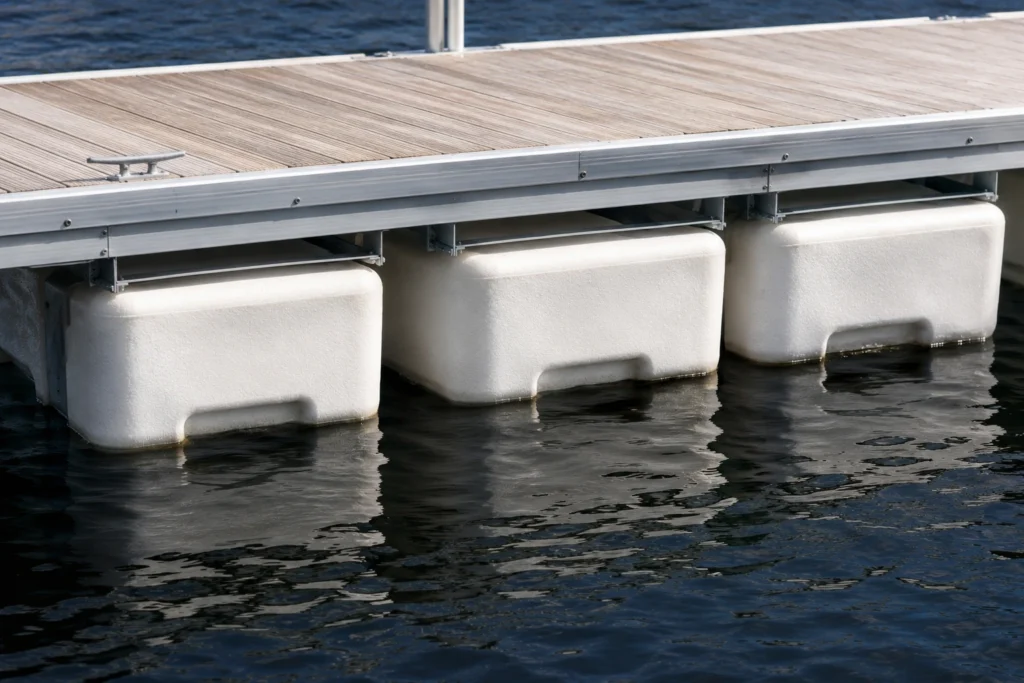
Many modern floating docks use advanced flotation systems that improve performance and durability. These systems often integrate with:
- Modular dock sections
- Drive-on PWC ports
- Dock accessories like ladders and bumpers
Choosing the right flotation system is key to building a stable and long-lasting dock.
Maintenance Tips for Foam Floats
To extend the life of your foam floats:
- Inspect regularly for cracks or damage
- Replace floats showing signs of water absorption
- Protect from impact and sharp objects
- Check attachment points for stability
Routine maintenance helps keep your dock safe and functional.
Are Foam Floats Worth It?
Foam floats for docks remain a popular and practical solution for many waterfront owners. They offer reliable buoyancy, affordability, and ease of installation.
However, understanding their limitations and comparing them to newer flotation technologies can help you choose the best option for your specific needs.
Not sure which dock flotation system is right for you? Contact DockStop today for expert advice, high-quality dock solutions, and durable floating systems built for Alberta waterfronts.