
Boat Docking Pole vs. Mooring Whips: Which Do You Actually Need?
When it comes to protecting your boat at the dock, choosing the right equipment can make the difference between a pristine hull and an expensive trip to the fiberglass repair shop. For new and experienced boaters alike, the terminology can sometimes be confusing. Two commonly used tools are boat docking poles and mooring whips, but despite their similar appearance, they serve entirely different masters.
If you’re unsure which one is right for your setup, this guide breaks down the mechanics, the benefits, and the specific scenarios where each tool shines.
What Is a Boat Docking Pole?
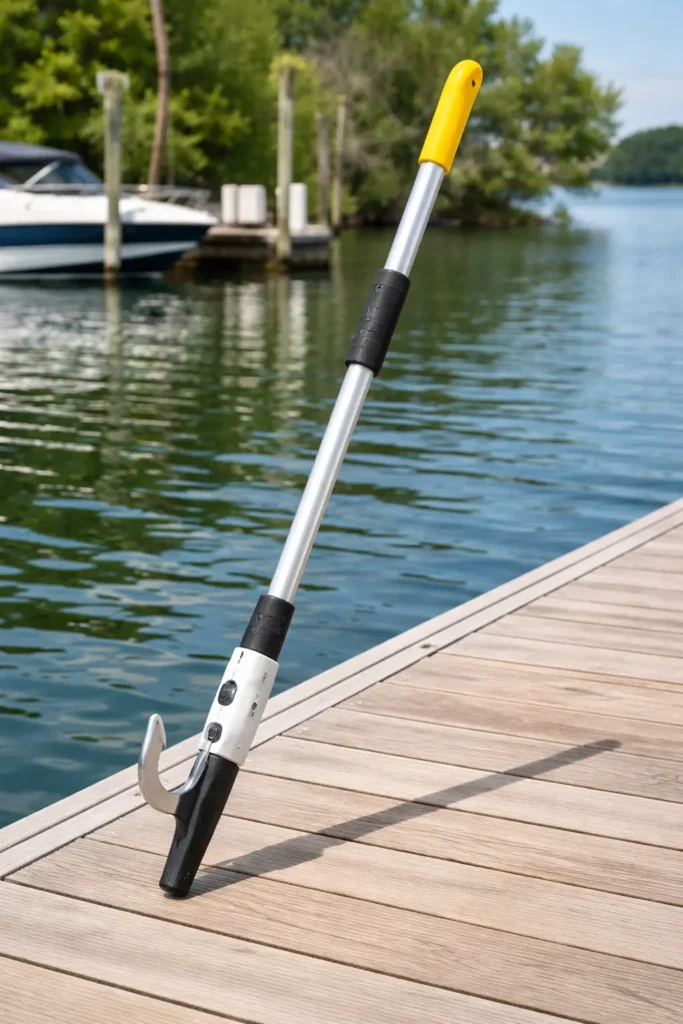
A boat docking pole, often referred to as a boat hook or push pole, is a handheld, portable tool designed to assist the captain or crew during the active phases of boating: arriving and departing.
Think of the docking pole as a literal extension of your arm. It typically consists of a long, lightweight handle (often telescoping for easy storage) made of aluminum or fiberglass. At the business end, you’ll find a specialized head featuring a hook for grabbing lines or dock edges, and a blunt, often padded tip for pushing off pilings.
Key Features include:
-
Maneuverability: It allows you to “fend off” from a dock or another vessel without putting your hands or feet in the “crush zone.”
-
Reach: It helps you grab a dangling mooring line or a dock cleat that is just out of arm’s length.
-
Control: It provides a pivot point when wind or current tries to swing your bow away from your target.
What Are Mooring Whips?
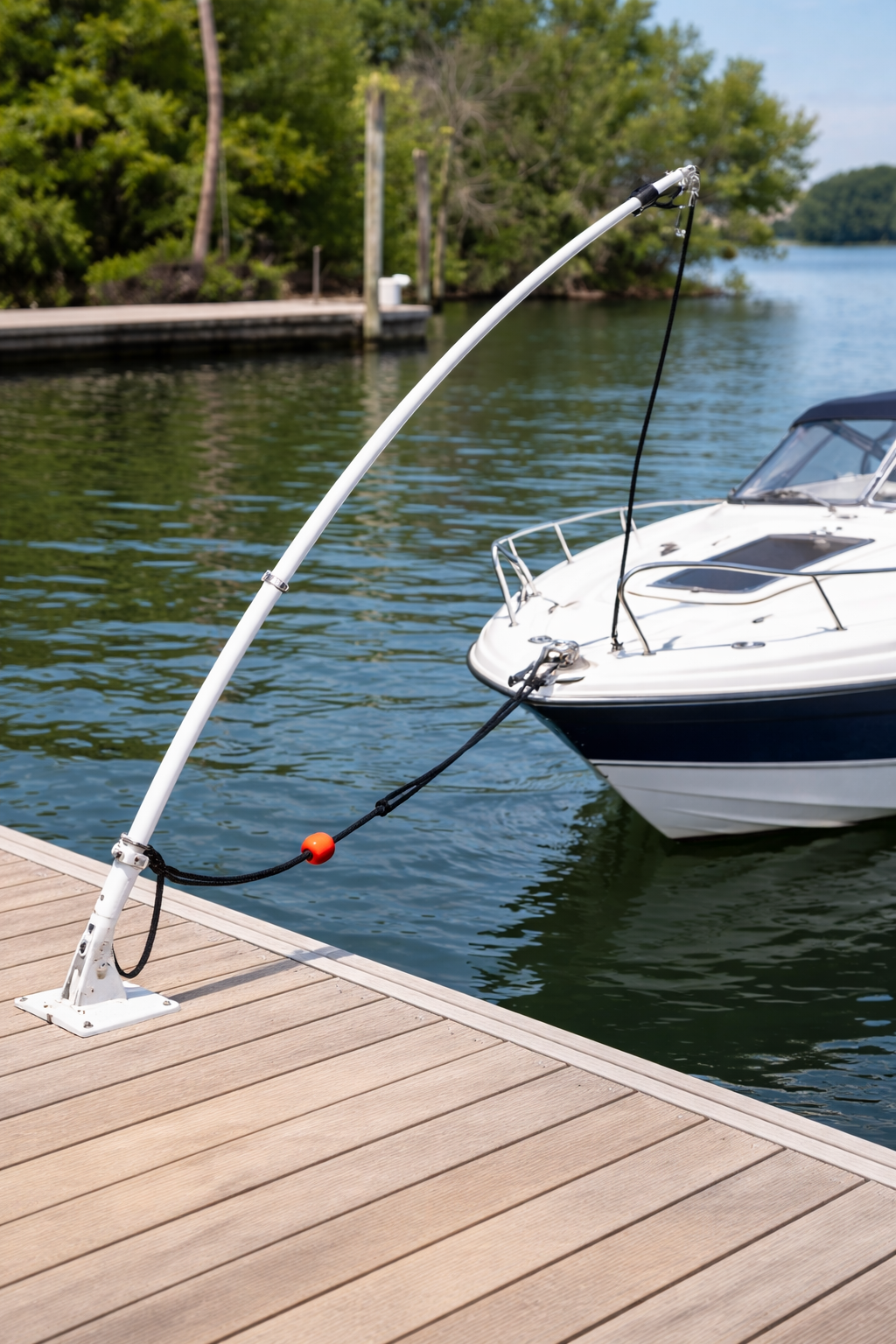
Mooring whips are a stationary, dock-mounted solution. Unlike the portable docking pole, these are long, flexible fiberglass rods that look a bit like giant fishing poles arching over the water.
The primary job of mooring whips is distance. They use constant spring tension to keep your boat a safe distance away from the dock face. When you tie up your boat, you attach lines from the tips of these whips to the cleats on the offshore side of your boat. The “spring” in the fiberglass pulls the boat away from the dock, while your standard mooring lines keep it from drifting too far out.
How they work:
-
Tension-Based Protection: They act as a shock absorber for the energy created by wind and waves.
-
Wake Management: When a passing boat sends a large wake toward your dock, the whips flex and absorb the movement, preventing the boat from slamming into the pilings.
-
Automatic Positioning: Once set, they require no human intervention to keep the boat centered.
Boat Docking Pole vs. Mooring Whips: The Deep Dive
To understand which you need, we have to look at the Three Pillars of Docking: Control, Protection, and Duration.
1. The Phase of Operation
The most significant difference is when you use them. A docking pole is an “active” tool. It is used while the engine is running and someone is standing on the deck. Once the boat is tied up, the pole is stowed away.
Mooring whips are “passive” or “stationary” tools. You don’t touch them while you’re out on the lake; they only come into play once you have returned and are “parking” the boat for the day or the season.
2. Physical Safety vs. Vessel Safety
A docking pole is a safety tool for the people on board. It prevents the need for “jumping” onto a dock or reaching dangerously over the gunwale. Mooring whips are a safety tool for the vessel. They ensure that even in a midnight storm, your boat isn’t rubbing its gelcoat raw against the dock’s bumpers.
3. Permanent vs. Portable
Because a docking pole is portable, it is essential for boaters who travel to different marinas, restaurants, or public docks. You bring your protection with you. Mooring whips are a commitment to a specific location. They are bolted to your private dock or your assigned slip.
When Do You Need a Boat Docking Pole?
Every boat should have a docking pole on board as part of its standard safety gear. It is an essential investment if you:
-
Boat Solo: Trying to manage the helm and grab a dock line simultaneously is a recipe for a “docking fail.” A pole gives you that extra four to eight feet of reach to snag a cleat.
-
Dock in High-Traffic Areas: In busy marinas, you often have to squeeze into tight slips with inches to spare. A pole allows you to guide the boat with precision.
-
Experience Heavy Winds: Wind is the enemy of a slow-moving boat. A docking pole allows you to hold your position against a gust while your crew secures the lines.
When Are Mooring Whips the Better Choice?
Mooring whips are an “environmental” solution. You should invest in them if:
-
You Live on a “Main-Channel” Waterfront: If your dock is exposed to constant wakes from passing traffic, fenders alone won’t protect your boat. Whips provide a dynamic barrier.
-
The Boat Stays in the Water Long-Term: Constant rubbing against dock bumpers, even soft ones, will eventually dull your boat’s finish. Whips ensure the boat “floats in space,” touching nothing but water.
-
You Have Variable Water Levels: Whips are excellent at adjusting to minor tide changes or fluctuating lake levels without needing constant line adjustment.
Why the Best Solution is Often “Both”
Both tools play an important role in protecting your boat, but they serve different purposes. A boat docking pole helps you dock safely and confidently, while mooring whips keep your boat secure once it’s tied up.
Imagine a typical return to the dock: You use the docking pole to safely snag the dock and pull the boat into the slip without over-revving the engine. Once the boat is settled, you hook up the mooring whips. The pole got you home safely, and the whips will keep you safe until your next trip.
If you are a casual boater who trailers their boat, a docking pole is all you need. However, if you own a waterfront home or rent a slip in an active harbor, mooring whips are one of the best investments you can make to prolong the life of your boat’s hull.
By combining the manual control of a pole with the constant protection of whips, you can enjoy the water knowing your boat is protected from the moment you approach the dock until the moment you leave it again.
Ready to Upgrade Your Docking Game?
Whether you need a heavy-duty telescoping boat docking pole for your next outing or a professional-grade set of mooring whips for your dock, the team at Dock Stop has you covered.