
Marina Dock Terminology: A Simple Guide for Boat Owners
If you don’t speak the language, navigating the world of waterfront development can be like sailing into a fog bank. Whether you are talking to a contractor about a new install or navigating a busy commercial slips, for safety, clarity, and getting the most out of your investment, you need to know the most common marina dock terminology used on port docks.
At Dock Stop, we believe that every boat owner should feel like a captain, both on the water and at the shoreline. Here is your comprehensive guide to the essential terms every boater needs to know.
The Foundation: Basic Dock Structures
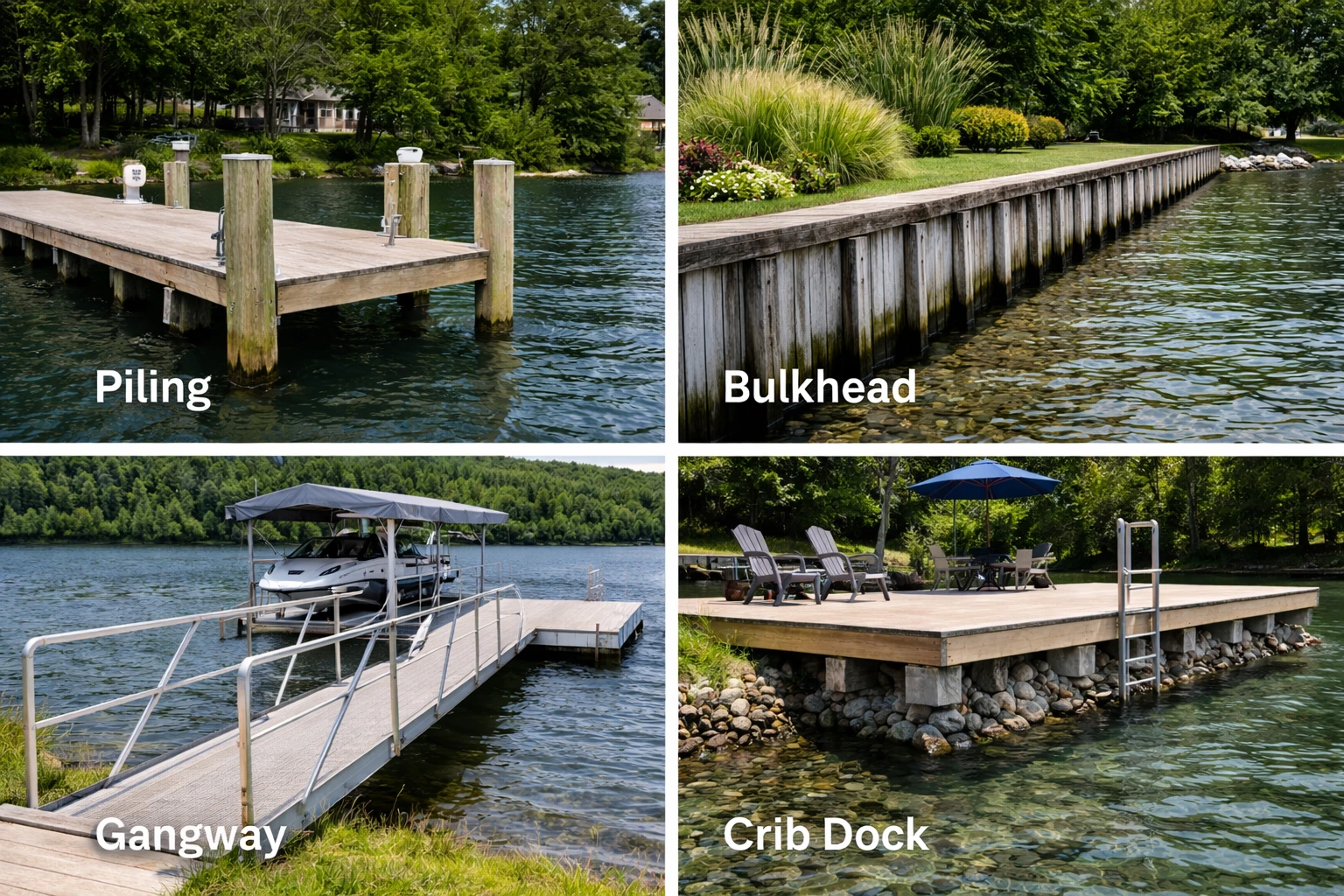
Before we get into the hardware, let’s define the “where” and “what” of your dock setup.
-
Piling: These are the heavy-duty vertical posts (usually wood, steel, or concrete) driven into the lakebed to support a fixed dock or to keep a floating dock in place.
-
Bulkhead: A vertical retaining wall along the shoreline designed to prevent erosion and separate the land from the water.
-
Gangway: The ramp or walkway that connects the land (or a fixed pier) to a floating dock. A good gangway is designed to pivot as water levels rise and fall.
-
Crib Dock: A type of permanent dock where heavy timber “cribs” are filled with rocks and sunk to the bottom to provide a foundation for the decking.
Navigating the Slip: Directions and Spaces
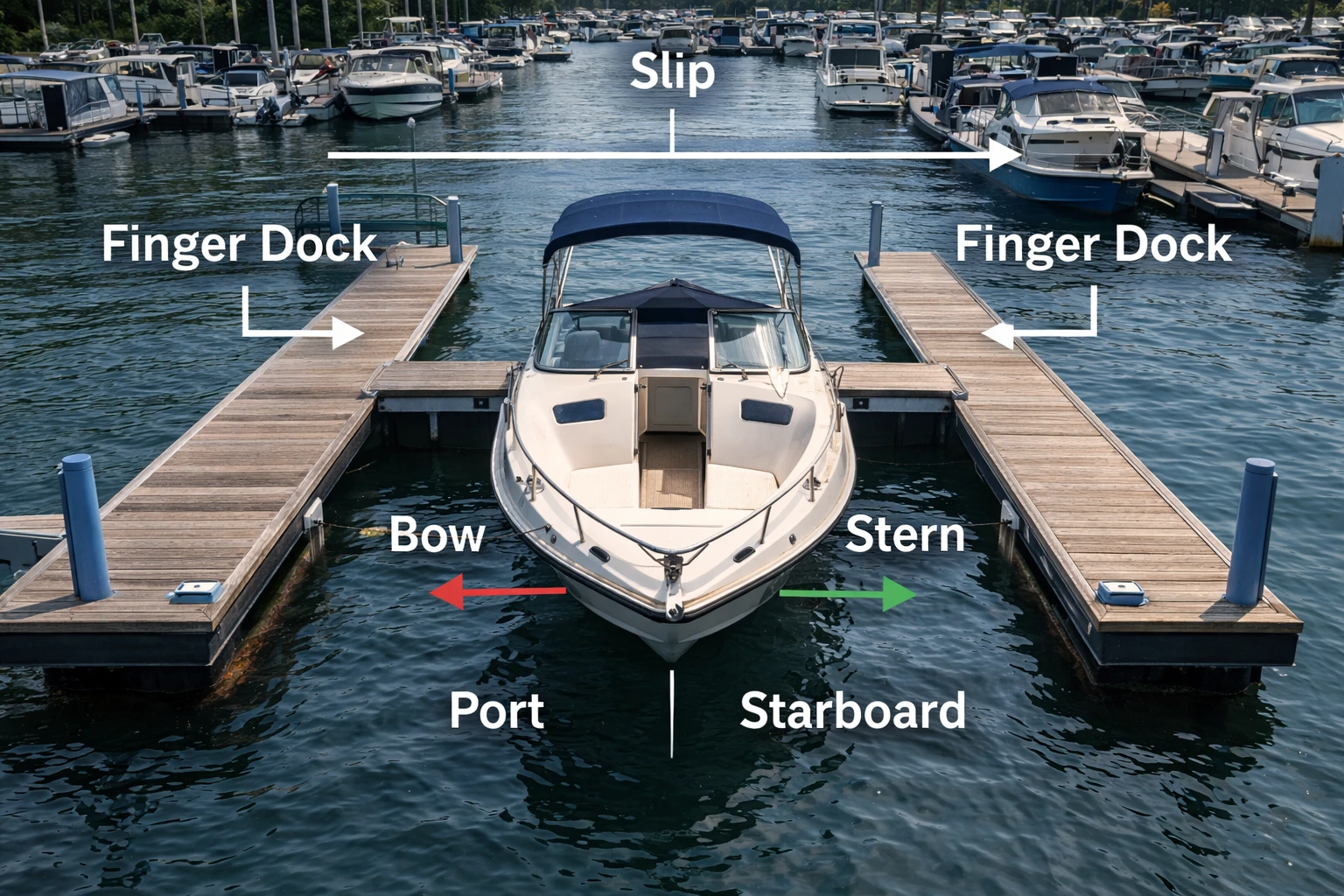
When you are in a marina environment, “left” and “right” take a backseat to more precise terms.
-
Slip: The “parking space” for your boat. It is the water area between two piers or finger docks where the vessel is tied up.
-
Finger Dock: A smaller, narrower dock that extends perpendicularly from the main pier to create the individual slips.
-
Bow and Stern: The front (Bow) and back (Stern) of your boat. Knowing these is critical when a dockhand tells you to “pull in bow-first.”
-
Port and Starboard: As we’ve covered in our [previous guide], Port is the left side and Starboard is the right side when facing forward.
Essential Marine Hardware
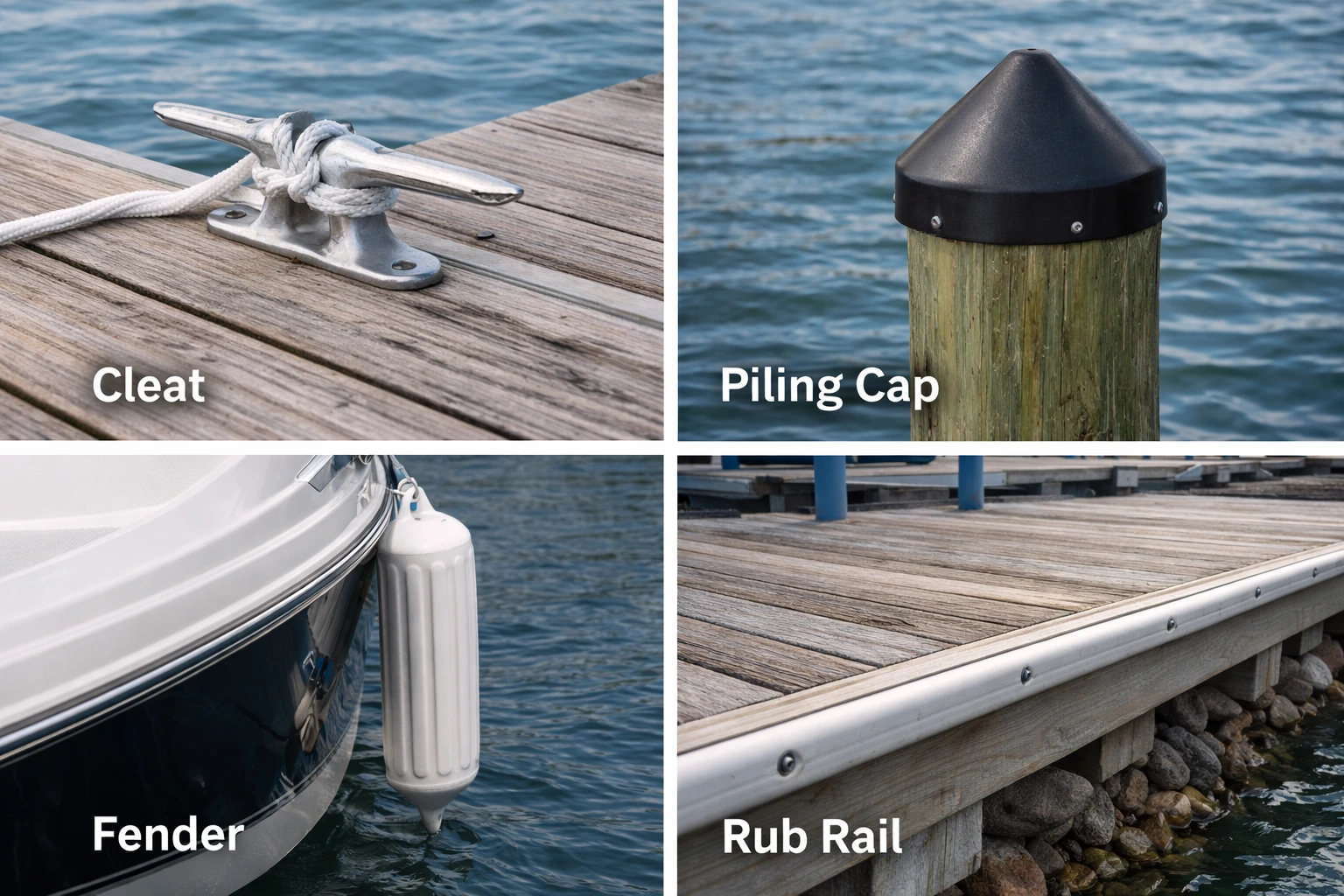
The small details are what keep your boat secure during a storm. If you are browsing the Dock Stop catalog, you’ll see these terms frequently:
-
Cleat: A T-shaped metal or composite fixture used to secure your dock lines.
-
Piling Cap: A protective cover (often cone-shaped) placed on top of pilings to prevent internal rot and keep birds from nesting.
-
Fender: Often called “bumpers,” these are the cushions placed between the boat and the dock to prevent hull damage.
-
Rub Rail: A protective strip attached to the edge of the dock (or the boat) to absorb the impact of minor bumps during docking.
The Modern Waterfront: Floating vs. Fixed
Understanding the different types of systems is the core of marina dock terminology.
-
Floating Dock: A system, like our popular Wave Armor solutions, that sits on top of air-filled or foam-filled floats. These are ideal for lakes with fluctuating water levels because the dock moves with the water.
-
Sectional Dock: A dock made of individual frames (like Hewitt aluminum frames) that can be added or removed in sections, often used in seasonal lakes.
-
PWC Port: A specialized floating “drive-on” dock designed specifically for Jet Skis and other personal watercraft.
Why Understanding Marina Dock Terminology Matters
Knowing the right terms helps you:
- Communicate clearly with dock builders and suppliers
- Choose the right dock system for your needs
- Improve safety when docking or mooring
- Understand maintenance and upgrades
When you call the pros at Dock Stop for a custom quote, knowing these terms helps us help you. If you tell us you need a “piling-mounted floating dock with a 20-foot gangway,” we can immediately visualize your shoreline and start designing a system that works.
Furthermore, using the right tools, like the Boat Lift Helper, is easier when you understand the mechanics of your lift’s cradle and bunk systems. So if you’re a new boat owner or upgrading your setup, learning the essential terms is a valuable first step.
Tips for Beginners Learning Dock Terminology
- Start with the basics like dock, slip, and cleat
- Ask questions when working with suppliers or installers
- Observe how docks are used in real marina settings
- Take note of terms used in product descriptions
The more familiar you become with marina dock terminology, the easier it will be to manage and upgrade your dock.
Ready to Build Your Dream Dock?
Don’t let the jargon intimidate you. Whether you are looking for a heavy-duty Hewitt lift or a modular Wave Armor floating system, the team at Dock Stop is here to translate your vision into a reality. We combine deep technical knowledge with the best marine hardware in the industry to ensure your waterfront is safe, functional, and beautiful.