
Do Floating Docks Need to Be Removed in Winter? The DockStop Guide to Ice Protection
If you own a floating dock in an area where the water freezes, you’ve likely asked the critical question: “Do floating docks need to be removed in winter?”
The quick answer is: It depends entirely on your local water body, the severity of the ice, and the type of floating dock you own.
While the safest option for any dock is often removal, modern floating docks—especially those built with robust, modular plastic or marine-grade aluminum—are frequently designed to withstand winter conditions with proper preparation.
Here is DockStop’s comprehensive guide to deciding if you should pull your floating dock or prepare it to stay in the water.
The #1 Threat: It’s Not the Freeze, It’s the Movement
The single greatest risk to any dock left in the water during winter is not the cold itself, but the movement of the ice.
When water freezes, it expands. When large sheets of ice move (due to wind, currents, or freeze/thaw cycles), they can create three highly destructive forces:
1. Ice Heaving (or Jacking)
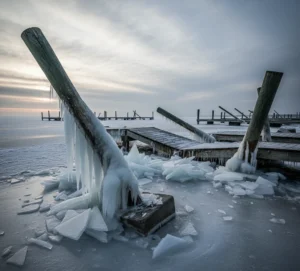
Ice adheres to dock posts or pilings and, as it expands or moves, it lifts the dock sections, potentially ripping them out of the lakebed.
2. Ice Shove
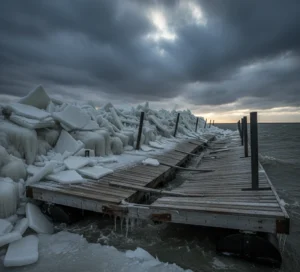
Large, heavy sheets of ice are pushed by wind or currents and slam into the dock or shoreline with immense force, crushing or buckling the structure.
3. Water Level Fluctuation
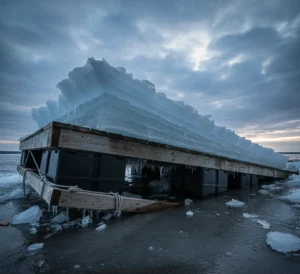
As water levels drop over the winter, ice sheets that formed at a higher level can rest on the dock, putting destructive downward pressure on the floats and frame.
Should I Remove My Floating Dock? (The Safest Option)
Removal is the safest and most guaranteed way to prevent winter damage and is highly recommended in the following conditions:
- You are on an open lake or large river: These areas experience the most aggressive ice movement and ice floes.
- You have heavy annual snowfall: Excessive weight on the dock adds stress to the whole structure.
- Your dock is an older or wooden floating style: These systems are less resilient to ice pressure.
- Your warranty requires it: Check your dock manufacturer’s warranty—many will not cover damage caused by ice if the dock was left in.
Winter Dock Removal Tips:
- Clean Before Storage: Power wash all sections and accessories to remove algae, dirt, and debris that could trap moisture and cause damage over winter.
- Store Flat and Protected: Store dock sections on a level surface (using pallets or blocking) to prevent warping, ideally in a protected area or loosely covered with a tarp.
- Label Sections: Use removable labels to mark the order of sections for easy reinstallation in the spring!
Can I Leave My Floating Dock In? (The Prepared Option)
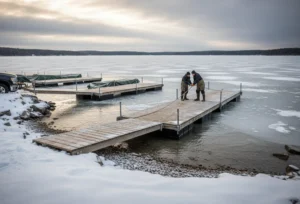
You may be able to leave your floating dock in the water if you are in a protected bay, cove, or small pond with minimal ice movement. This option requires proactive winterization steps.
Essential Steps for Leaving a Dock In:
-
Disconnect and Secure
- Remove Accessories: Detach and store all ladders, benches, bumpers, electrical cords, and especially the gangway/ramp that connects to the shore.
- Loosen Anchoring: Disconnect chains or cables from the shoreline/seabed and attach them to a long floating rope or line. This slack allows the dock to rise and fall with water levels and ice formation without transferring stress.
- Tie Off Securely: Use a separate, strong line to tie the dock to a substantial, immovable object on the shore (like a tree or concrete pillar) with plenty of slack.
-
Prevent Ice Formation (Use a Dock Bubbler)
- A dock bubbler (or de-icer) is your best defense against ice damage. This device circulates warmer water from the bottom of the lake to the surface, keeping a small, essential area of water around your dock from freezing solid.
- Placement is Key: Place the bubbler near the dock floats and any pilings to keep them free from adhering ice.
-
Monitor and Clear
- Regularly check on your dock throughout the winter.
- Clear off any heavy snow accumulation to reduce strain on the floating structure.
- Ensure your bubbler is running correctly and that the area is not being encroached upon by large sheets of moving ice.
DockStop Conclusion: Safety First
While leaving a floating dock in the water is often more convenient and can be achieved safely with modern dock technology and a quality dock bubbler, the ultimate decision comes down to the risk.
If you are concerned about heavy ice movement, removal is the professional recommendation. If you decide to keep it in, proper winterization is non-negotiable!
Need a Winterization Supplies?
DockStop has everything you need to protect your investment this winter, from heavy-duty mooring lines to the best-rated de-icers on the market.
Contact DockStop today to speak with a winterization expert and ensure your dock is safe and ready for the spring thaw!