
What Is a Jetty? A Simple Guide to Marine Structures
If you’ve ever walked along a shoreline or visited a marina, you may have seen a long structure stretching from land out into the water. But what is a jetty, and what purpose does it serve?
In simple terms, a jetty is a marine structure that extends from the shore into a body of water. It is typically built from stone, concrete, or wood and serves two primary functions: protecting coastlines from erosion and currents and providing access for boats.
Let’s take a closer look at how jetties work and why they’re important.
What Is a Jetty? Definition and Basic Structure
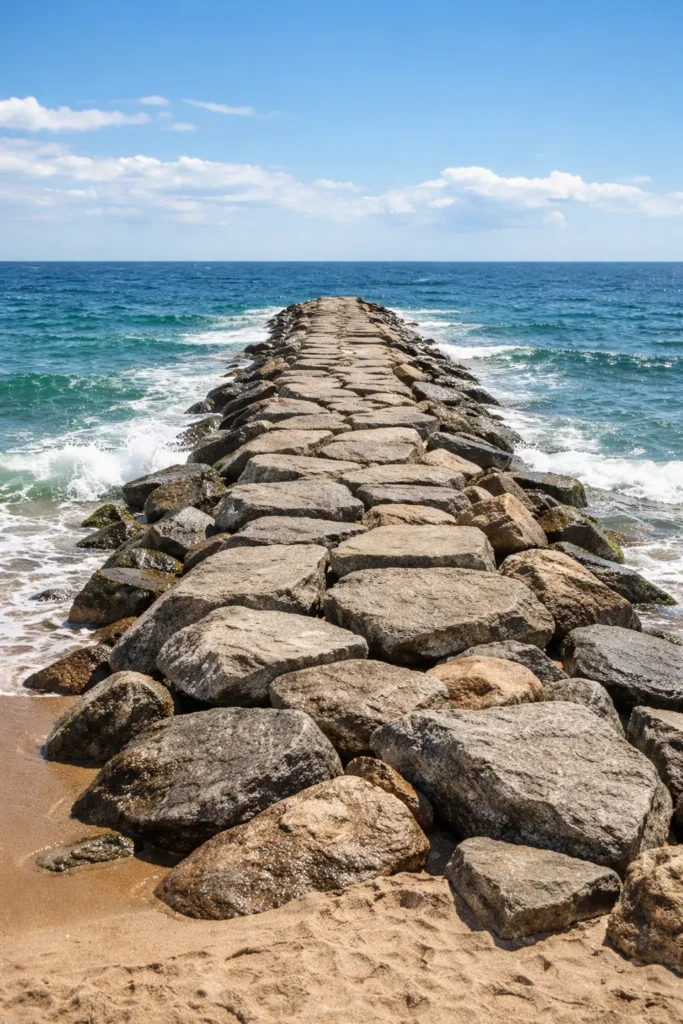
A jetty is a man-made structure that projects from the land into a lake, river, or ocean. Unlike docks, which are primarily built for mooring boats, jetties are often constructed to influence water movement.
Jetties are commonly made from:
-
Large natural rocks (riprap or boulders)
-
Reinforced concrete
-
Treated timber
-
Steel and composite materials
Their construction materials depend on the environment, wave action, and intended use.
The Dual Purpose of a Jetty
When asking what is a jetty, it’s important to understand its two major roles.
1️⃣ Coastal Protection
One of the primary functions of a jetty is to protect shorelines and harbors from:
-
Strong currents
-
Tidal movement
-
Wave erosion
-
Sediment buildup
By extending into the water, a jetty helps redirect water flow. This reduces shoreline erosion and keeps navigation channels clearer for boats.
In ocean environments, paired jetties are often built at harbor entrances to stabilize channels and reduce sand accumulation.
2️⃣ Providing Boat Access
In addition to erosion control, jetties often function as:
-
Walkways for anglers
-
Access points for small boats
-
Protective barriers for marinas
-
Launching or docking zones
While docks float or rest on supports, jetties are typically solid and fixed in place, making them sturdy platforms for foot traffic.
Jetty vs Dock: What’s the Difference?
People sometimes confuse jetties with docks or piers. Here’s how they differ:
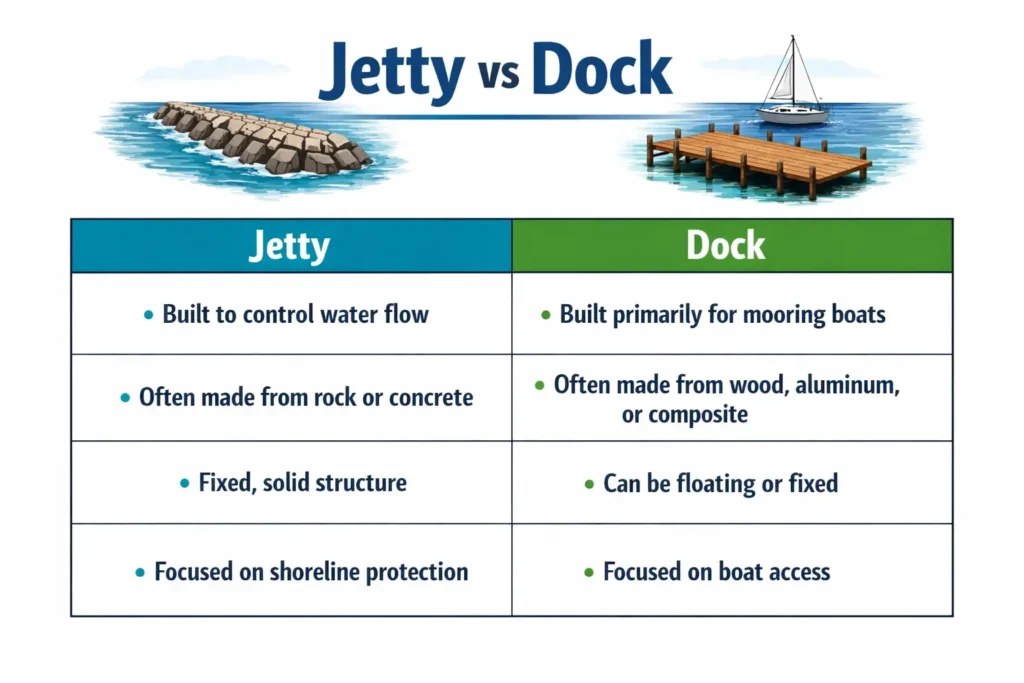
Understanding the distinction helps clarify what is a jetty versus other waterfront structures.
Where Are Jetties Commonly Used?
Jetties are most often found in:
-
Coastal ocean shorelines
-
River mouths
-
Harbors and marina entrances
-
Large lakes with strong wave action
In inland waterfront properties, smaller-scale jetties may also provide both shoreline protection and limited access.
How Jetties Protect Shorelines
Water constantly moves sediment along coastlines. Without barriers, this movement can:
-
Erode beaches
-
Undermine docks
-
Shift navigation channels
A jetty disrupts that flow, helping to stabilize the shoreline and reduce costly damage over time.
However, because jetties alter natural water patterns, they must be carefully engineered to avoid unintended erosion elsewhere.
Are Jetties Permanent Structures?
Yes, most jetties are permanent installations. Unlike seasonal docks that may be removed in winter, jetties are designed to withstand:
-
Ice pressure
-
Heavy storms
-
Tidal fluctuations
-
Long-term environmental exposure
Their durability is one reason they’re commonly constructed using stone or reinforced concrete.
Do You Need a Jetty for Your Waterfront?
Not every shoreline requires a jetty. They are typically necessary in areas with:
-
Strong tidal movement
-
Significant shoreline erosion
-
Sediment control issues
-
Harbor channel maintenance needs
For residential waterfront properties, docks and lifts are more common unless erosion becomes a major concern.
Modern Alternatives for Residential Waterfronts
While large-scale jetties are common in coastal engineering, most Alberta lakefront properties benefit more from flexible, modular docking systems rather than permanent rock or concrete structures.
If you’re improving your waterfront access or looking for adaptable solutions, consider modern floating systems designed for changing water levels and seasonal conditions.
Explore Our Wave Armor Docking Solutions
As Alberta’s Wave Armor dealer, Dock Stop offers innovative floating docking systems designed for durability, flexibility, and long-term performance.
Whether you’re upgrading a private dock or enhancing a marina setup, we provide:
-
Floating dock systems built to move with changing water levels
-
Drive-on PWC ports for convenient jet ski access
-
Customizable dock accessories to enhance safety and functionality
These modular systems provide many of the access benefits people associate with jetties—without the permanence or shoreline alteration.
So, what is a jetty?
A jetty is a fixed marine structure that extends from the shore into the water, built primarily to control currents, reduce erosion, and provide protected access for boats and pedestrians. Made from durable materials like stone, concrete, or wood, jetties play an essential role in coastal engineering and shoreline management.
Understanding how jetties function helps waterfront owners make informed decisions about protecting and improving their marine property.