
Boat Docking
Port is Which Side of the Boat? The Ultimate Guide to Boating Directions
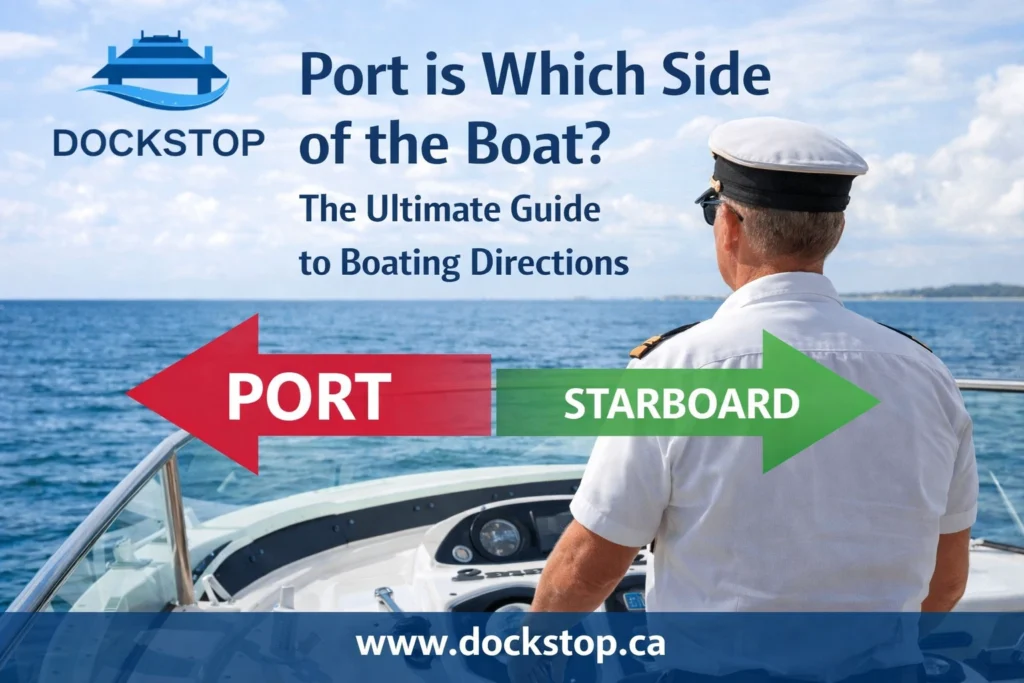
When you are out on the water, the last thing you want is a communication breakdown. Imagine a captain yelling “Look to the left!” while a passenger is facing the stern—suddenly, “left” becomes a very confusing direction. To avoid this, boaters use a universal language. If you’ve ever found yourself scratching your head and asking,…
Read MoreBeyond the Hook: Choosing the Best Boat Anchoring System for Shoreline Mooring

Anchoring your boat near shore might seem simple — drop a fluke anchor, toss a line, and you’re done. But in many waterfront environments, especially sandy beaches or mucky lake bottoms, a standard anchor may not provide the security you need. Choosing the right boat anchoring system can make the difference between a stable, reliable…
Read MoreFrom Cables to Bunks: A Guide to Boat Lift Cradle Parts and Their Functions
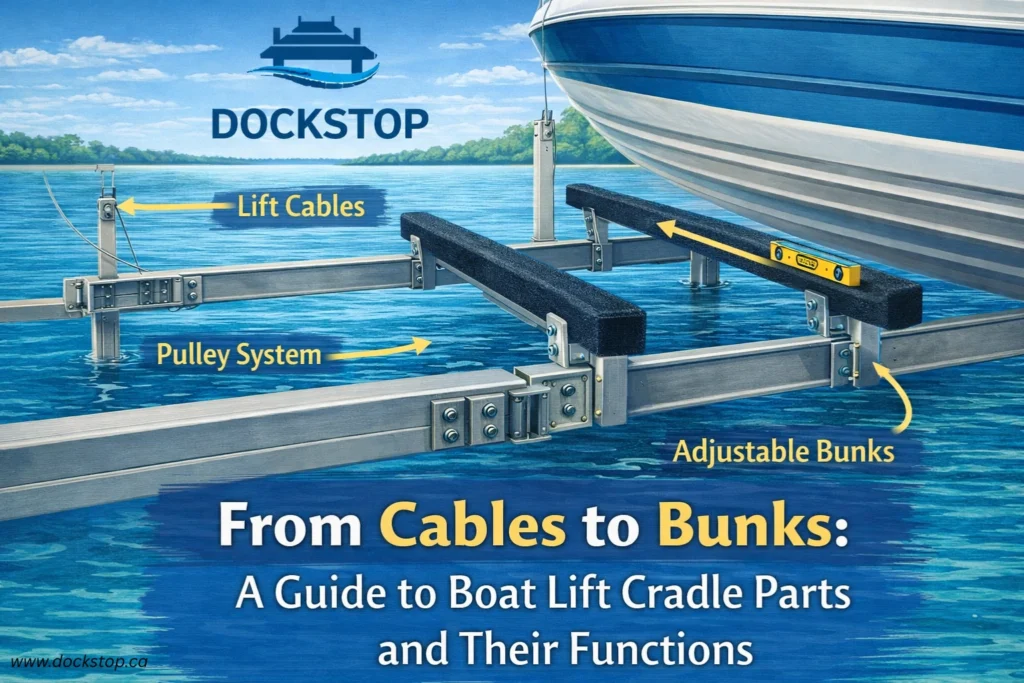
When it comes to protecting your watercraft, the lift frame is only half the story. The real “heavy lifting” happens at the cradle—the structural platform that directly supports your boat’s hull. Understanding your boat lift cradle parts is essential for more than just maintenance; it is about safety. If one component of the cradle beam…
Read MoreSeamless Connection: How to Attach a PWC Drive-On Dock to Any System
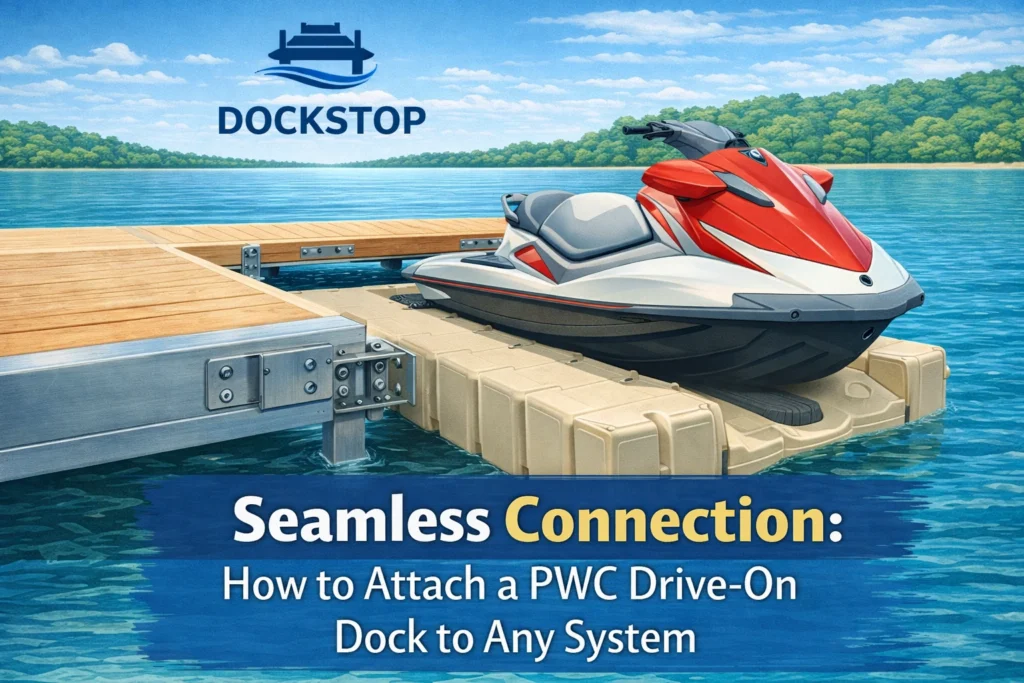
Whether you just picked up a brand-new Sea-Doo or you’re finally tired of the “winch-and-pray” method of docking, a drive-on port is the ultimate shoreline upgrade. But the biggest question we get at Dock Stop isn’t about the port itself—it’s about the connection. “Will this work with my old wooden dock?” “What if my dock…
Read MoreThe Perfect Cradle: A Step-by-Step Guide to Adjusting Boat Lift Bunks
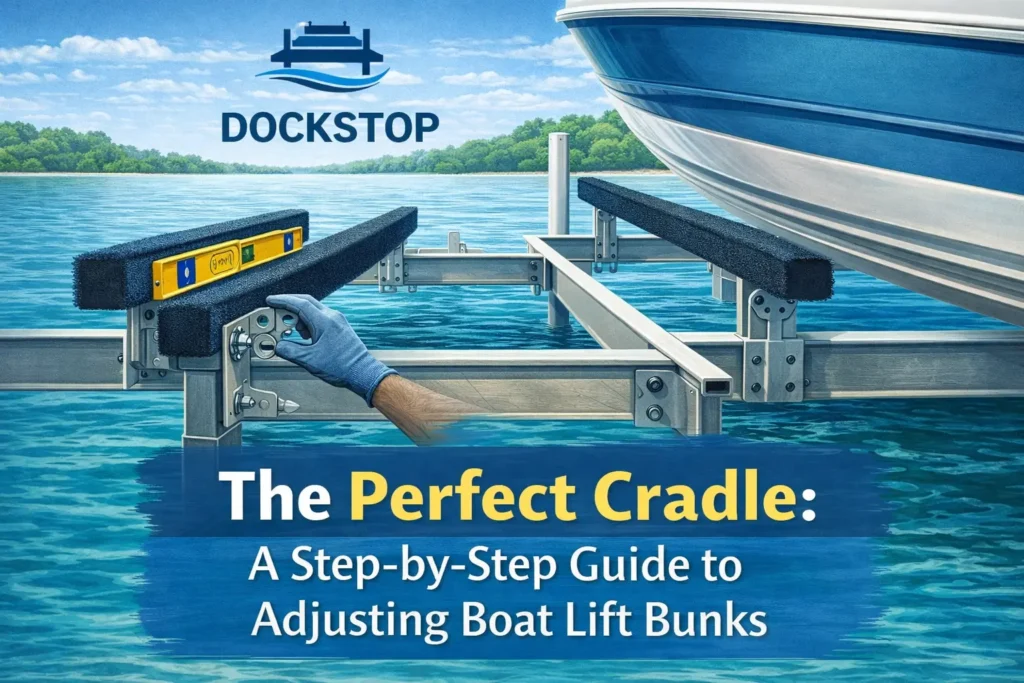
Getting a new boat is an incredible feeling, but before you celebrate with a sunset cruise, there is one technical hurdle you can’t afford to skip: adjusting your boat lift bunks. Think of your boat lift as a custom-tailored suit for your vessel. If the fit is off, it’s not just uncomfortable—it’s structurally dangerous. Improperly…
Read More