
Beyond the Hook: Choosing the Best Boat Anchoring System for Shoreline Mooring
Anchoring your boat near shore might seem simple — drop a fluke anchor, toss a line, and you’re done. But in many waterfront environments, especially sandy beaches or mucky lake bottoms, a standard anchor may not provide the security you need.
Choosing the right boat anchoring system can make the difference between a stable, reliable mooring setup and constantly repositioning your boat. Whether you’re dealing with shallow water, soft sediment, or fluctuating lake levels, modern shoreline anchoring solutions offer better stability and convenience.
In this guide, we’ll explore the best options for shoreline anchoring, including auger anchors, sand spike anchors, and shallow water mooring systems.
Why a Standard Anchor Isn’t Always Enough
Traditional fluke anchors work well in deeper water where they can dig into sand or mud. However, when used close to shore, they often struggle to hold because:
-
The water is too shallow for proper anchor drag
-
Soft or mucky lakebeds reduce holding power
-
Waves or wind can easily shift the anchor
-
Frequent repositioning becomes frustrating
For shoreline docking or temporary mooring, a specialized boat anchoring system designed for shallow water conditions provides much greater reliability.
Common Shoreline Anchoring Solutions
1. Auger Anchors: Maximum Holding Power
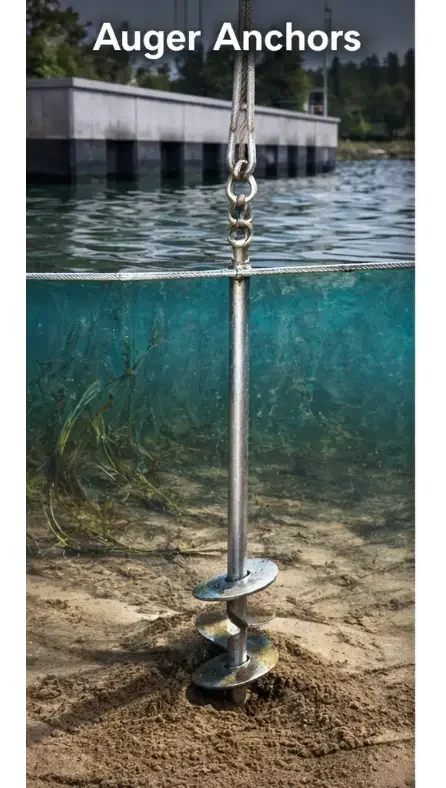
Auger-style anchors function similarly to a giant screw. They twist deep into the lakebed or shoreline soil, creating a strong hold even in softer sediment.
Benefits of Auger Anchors
-
Excellent holding power in sand and mud
-
Ideal for shallow water mooring
-
Resistant to shifting from waves or wind
-
Reliable for seasonal or semi-permanent setups
Auger anchors are commonly used for dock anchoring, boat lifts, and shoreline mooring systems because they provide consistent stability.
–
2. Sand Spike Anchors: Simple and Effective
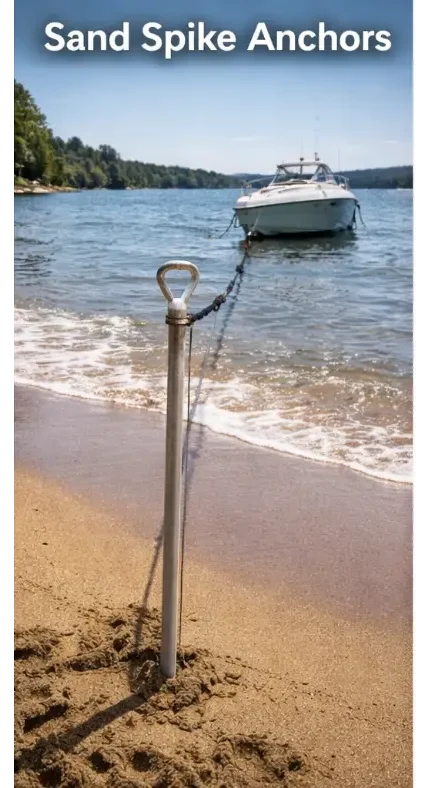
A sand spike anchor is a simple but effective shoreline anchoring solution designed specifically for beaches and sandy environments.
How Sand Spike Anchors Work
-
A metal spike is driven into the shoreline
-
The boat line is attached above the waterline
-
The spike holds the boat in position from shore
These anchors are particularly useful for:
-
Beach mooring
-
Temporary stops while swimming or fishing
-
Areas where traditional anchors cannot set properly
Sand spike anchors are lightweight, portable, and easy to install, making them a popular option for recreational boaters.
3. Multi-Point Shoreline Anchoring Systems
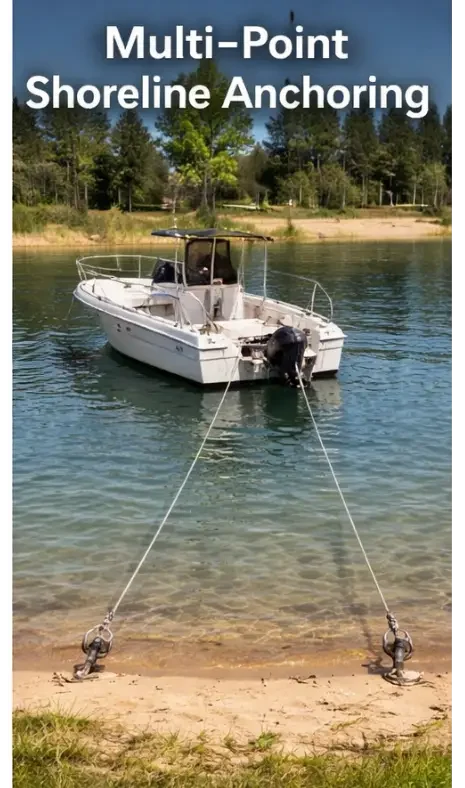
For a more permanent setup, many boaters create a multi-point boat anchoring system.
This method uses multiple anchors or shoreline points to stabilize the boat, typically including:
-
One offshore anchor
-
One or two shoreline anchors
-
Stabilizing lines that keep the boat centered
This configuration reduces swing movement and creates a more stable docking position.
Creating a “Home Base” for Your Boat
Many waterfront owners want more than just temporary anchoring — they want a dependable home base for their boat.
Modern modular dock systems can integrate with shoreline anchoring solutions to create a stable docking environment. Floating docks and drive-on ports can be secured with proper anchors to maintain position even when water levels change.
This approach combines:
-
Reliable shoreline anchoring
-
Easy boat access
-
Protection from waves and drift
For many lakefront properties, it provides a more convenient alternative to traditional anchoring alone.
Moving or installing dock equipment can be physically demanding, especially during seasonal setup. The Boat Lift Helper makes repositioning lifts and dock equipment safer and easier.
Choosing the Right Boat Anchoring System
When selecting the best boat anchoring system for your shoreline, consider the following factors:
- Bottom Conditions – Different anchors perform better depending on whether the lakebed is:
- Sandy
- Rocky
- Muddy
- Gravel-based
- Water Depth – In shallow water mooring, specialized anchors like augers or spikes perform better than traditional fluke anchors.
- Wave Exposure – If your shoreline experiences wind-driven waves, stronger anchoring solutions will be necessary.
- Boat Size and Weight – Larger boats require stronger anchor systems and heavier hardware.
Benefits of a Proper Shoreline Anchoring Setup
Investing in the right anchoring system offers several advantages:
-
Improved boat stability near shore
-
Reduced risk of drifting or grounding
-
Easier boarding and access
-
Less stress on mooring lines
A well-designed system makes shoreline docking safer and more convenient for everyday boating.
Finding the Right Anchoring Solution
A basic anchor may work in open water, but shoreline environments often require a more specialized solution. By choosing the right boat anchoring system, such as auger anchors, sand spike anchors, or a multi-point mooring setup, you can secure your boat safely and reliably.
For boaters looking for a more permanent docking setup, modular floating docks can work alongside a reliable boat anchoring system to create a stable waterfront solution. Explore our Wave Armor docking systems to see how floating docks and drive-on ports integrate with shoreline anchoring.
Secure Your Investment Today.
Whether you’re docking for the day or creating a long-term lakefront setup, proper shoreline anchoring ensures your boat stays exactly where it should. Your boat is a major investment—don’t trust it to a standard hook that wasn’t designed for the shore. Contact Dock Stop today to find the perfect boat anchoring system for your lakebed and ensure your vessel stays exactly where you left it.