
Seamless Connection: How to Attach a PWC Drive-On Dock to Any System
Whether you just picked up a brand-new Sea-Doo or you’re finally tired of the “winch-and-pray” method of docking, a drive-on port is the ultimate shoreline upgrade. But the biggest question we get at Dock Stop isn’t about the port itself—it’s about the connection.
“Will this work with my old wooden dock?” “What if my dock floats but the port doesn’t?” “Can I put this in a spot where I don’t even have a dock?”
The short answer is yes. Modern modular ports are essentially “Legos for boaters.” So whether you have a classic wooden dock, a high-end aluminum frame, or no dock at all, installing a PWC drive-on dock is a straightforward afternoon project.
Here is how you can achieve a seamless connection, no matter what your current waterfront looks like.
What is a PWC Drive-On Dock?
A PWC drive-on dock (often called a jet ski port) is a floating, high-density polyethylene platform. Its primary goal is to turn docking into a “drive-on, push-off” process. By keeping your craft completely out of the water, you protect the hull from:
-
Algae and Osmosis: Preventing “hull blisters” in fiberglass.
-
Corrosion: Keeping the jet pump and intake clear of debris.
-
Dock Rash: Eliminating the friction caused by wind and waves.
Connection Options for Every Dock Type
1. Attaching to a Floating Dock
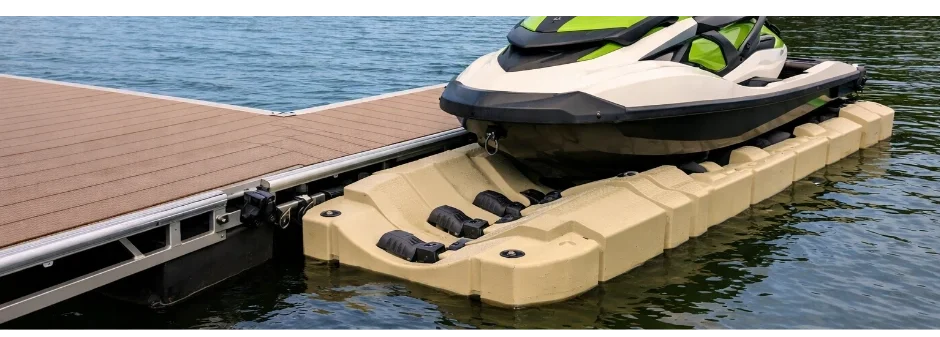
This is the most seamless integration. Because both the dock and the port float, they rise and fall in perfect harmony with the water levels.
-
The Method: Use hinge connectors or flexible couplers (often called “dog bones”).
-
Pro Tip: Ensure the port is flush with the dock surface to create a safe, trip-free transition for passengers.
2. Connecting to a Sectional (Stationary) Dock
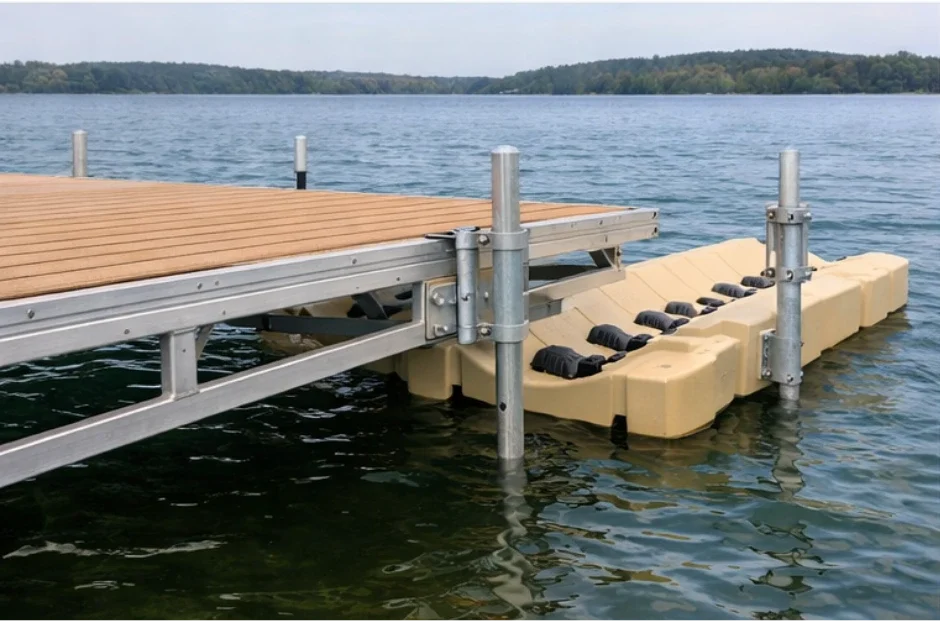
Sectional docks sit on legs and remain at a fixed height. However, the PWC port must remain floating to function. Crucially: Never bolt a floating port directly to a stationary dock.
-
The Method: Use Slide-Pole Brackets or Z-Brackets. These allow the port to slide vertically on a pipe while staying pinned horizontally to the dock.
-
Pro Tip: This setup is essential for reservoirs or lakes where water levels fluctuate significantly throughout the season.
3. Standalone Installation (No Dock Required)
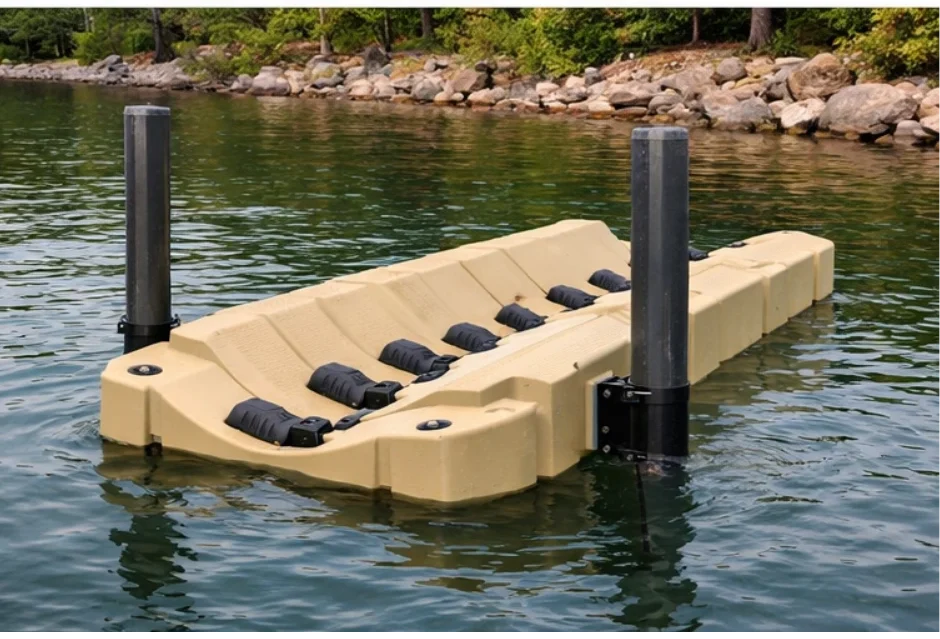
If you don’t have a dock, you can still have a dedicated PWC station.
-
The Method: Drive two mooring pilings (heavy-duty steel pipes) into the lakebed. The port is then sleeved over these pipes using integrated brackets.
-
Pro Tip: This is a cost-effective solution for narrow shorelines or “PWC-only” zones where a full dock isn’t permitted.
Common Installation Mistakes to Avoid
- Mistake #1: Using Rigid Hardware. If you connect a floating port to a stationary dock with rigid bolts, the first large wake will snap the hardware or warp your dock frame. Always allow for vertical movement.
-
Wrong Material: Only use stainless steel or hot-dipped galvanized hardware. Standard steel will rust and seize in months.
-
Ignoring Wave Direction: If possible, install the port on the leeward side of your dock (the side protected from the wind) to make the approach smoother.
-
Poor Leveling: Ensure the rollers are adjusted to your specific PWC model before final mounting to prevent uneven pressure on the hull.
Complete Your Waterfront with Wave Armor Solutions
While modular ports are designed to integrate with existing systems, for the ultimate waterfront experience, consider upgrading to a fully cohesive setup. We are proud to provide and build Wave Armor docking solutions.
As a trusted dealer, we specialize in high-end, durable Wave Armor floating dock systems and innovative drive-on ports that seamlessly lock together to create a stable, stylish, and long-lasting waterfront.
DIY vs. Professional Installation
Most modular PWC ports are designed for a “two-person, one-afternoon” DIY install. However, if your lakebed is extremely rocky or you are integrating the port into an older dock that may need structural reinforcement, a professional setup ensures the safety of both your dock and your watercraft.
Modern modular systems have removed the guesswork from installing a PWC drive-on dock. With the right brackets and a clear understanding of your water levels, you can transform your waterfront into a high-performance docking station.
Ready to add a PWC drive-on dock to your existing system? Contact Dock Stop today for expert advice, compatible connectors, and modular solutions that make installation simple, secure, and built to last.